I finished Resident Evil 9 the other day and liked it without loving it, which is a bit surprising. Admittedly, my expectations were raised from what seemed to be a huge concentration of buzz — we are all, every single one of us, human enough to feel a jolt of excitement when somebody tells you the number on Metacritic for this one is pretty high. But I think this ended up being my least favourite of the new Resident Evil games? Even more than the remake of 3, for which I experience an entirely different genre of disappointment. There was no blueprint here; they could make whatever choices they wanted, and rather than making a slew of bad ones, they made just enough great ones that I’m left wishing they’d tried something different.
It’s decently representative of Resident Evil 9 to say that it’s really a hybridization of two different games. In one, a refined riff on the methods of the previous two entries; in another, Leon Kennedy. Let’s talk about it.
GRACE
“Wrenwood” isn’t her last name.
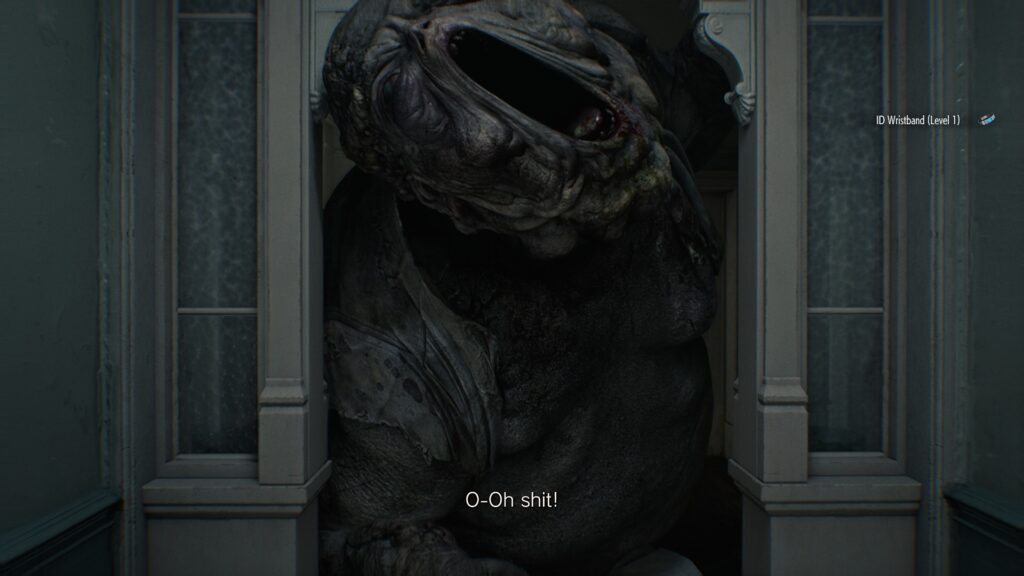
I love Grace in this one, by which I mean everything in the game actually belonging to her corner.1 As a riff on the last two Resident Evil games, the Rhodes Hill Care Center might be the most excellent layout in one of these since — well, since the original Resident Evil 2, probably. It has legitimately scary and novel enemies, interesting routing, and manages to regularly surprise you in the margins of a format I’d taken to be all but desiccated.
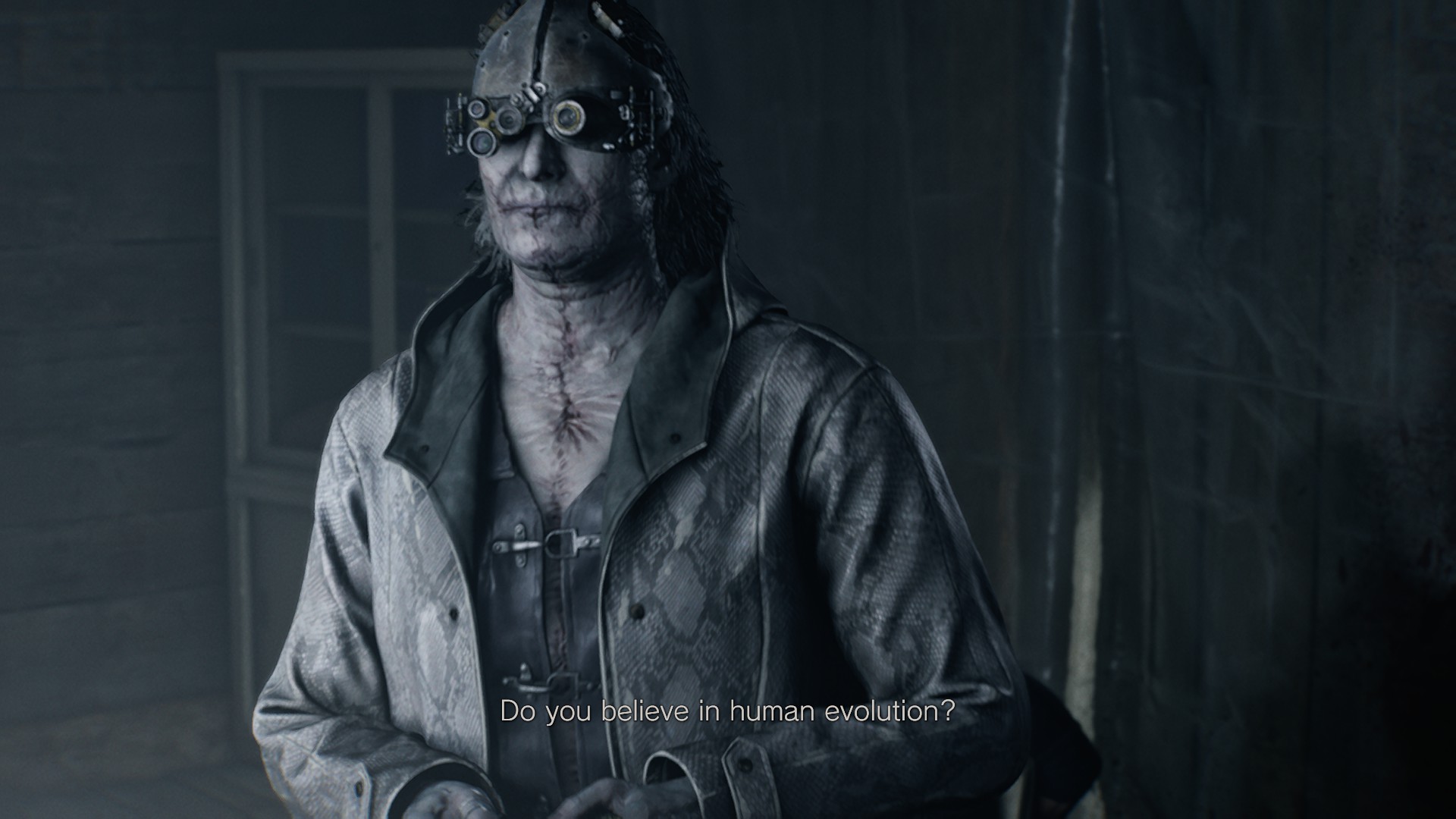
The big stars here are unquestionably the zombies, who are a delightfully refreshing take more in line with The Return of the Living Dead than any of the well-mined Romero films. For the most part, these ones retain the qualities and neuroses of the people they were before: maids frantically wipe up messes you’ve made, foppish staff fret about making sure every light is turned off, patients are rendered frantic by loud noises in their vicinity… great stuff all around. The organic little traversal puzzles they generate are spectacular. I think it’s probably the coolest “new” thing in these games since Resident Evil 7 made them first-person.
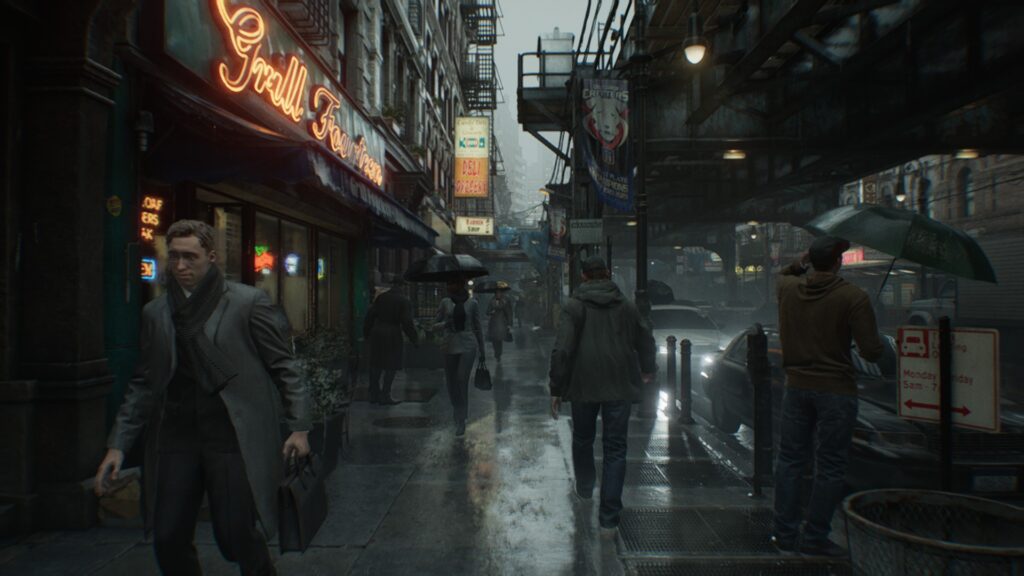
It’s a little awkward, but I dig the opening a lot. It’s a fun change of pace to spend time in a regular city with regular people before walking away from the populated zone to enter a Resident Evil Bullshit Zone. It gives off the same vibe as a Thief level — an uncut descent from comforting normalcy to something weird and scary happening at an angle adjacent to reality.
It’s not perfect, of course. But for reasons we’re about to get to, I don’t really place my issues with this segment on the segment. Namely, they all strike me as compromises in the face of its relatively short length: the lack of weapons2, the absence of interesting trade-offs in routing or resource management, the basement area being sorta one-note. A lot of things feel undercooked or a tad ancillary, like the choice between increasing your health or damage — a tense choice in theory, though in practice I assumed I would get plenty of both and then never deliberated much over the choice until I realized “oh wow, I don’t get many of these” before the game promptly stopped having me play as Grace.
There’s a ton of stuff like that. Take the Requiem, her only gun besides a pistol and… the better pistol. Ammo is rare, so you’re naturally stingy with it. But there’s never any stress involved with when to deploy it, since the “right situation” always feels clearly and cleanly telegraphed: the new Crimson Heads, all the miniboss enemies, and so on. The problem is that the gulf of power between the game’s two weapons is so vast that there’s paradoxically no uncertainty or desperation involved in their use. In a game like RE2make, the shotgun was great for Lickers, but it was also a really dependable way to dispatch crowds of zombies, or even just to pop heads under duress. But firing a Requiem bullet at anything less than an obvious Super Enemy feels like launching mortar shells at an ant instead of waiting for some soldiers to arrive — a flat version of a classic Resident Evil dilemma.
I liked the Hemolytic Injectors but kinda wished they created more situations where you regretted not having them, or where their use was tempting but inadvisable. The problem with the crafting in this one is that you can almost always carry around enough blood and scrap to make a thing when you need it instead of needing to make tough predictions about what to bring and what to leave behind. This might be the first Resident Evil game where the item box feels like an afterthought.
There’s also the blood collection element, which is… fine. I don’t know. I guess it adds something? Maybe if the crafting was more interesting, or if you at least felt like you had to get a lot of it. As it is, there’s blood everywhere and no reason to take any blood-related risks. Maybe if every recipe cost more, or if ambient blood piles actually had some sort of time limit attached to their availability. There’s something here, but the game doesn’t manage to pull it out.3
In spite of every shortcoming, the result is still something that feels more developed than any previous first-person RE game — and this is with how little stuff is actually in it. It’s a bit of a sting, because it feels like there could be so much more here with the same runtime afforded to Resident Evil 7 or 8. Instead, we get…
LEON
“Rhodes Hill” actually does happen to be Leon’s last name.
Leon doesn’t really work for me here. For the most part, it feels like a diet-sized RE4 — the spiritual successor to that DLC for 7 where you punch alligators as Jack Baker’s secret brother. I like this type of game a lot and I wanted to like it here, but it’s a hard sell when it doesn’t do anything.
The problem starts in Raccoon City. It’s not a terribly interesting locale to begin with: the sort of dusty and brown-beige ruin that’s been endemic to videogames since the mid-aughts. It turns out that basically everything interesting about the (remarkably few) instances of doing Resident Evil shit on these streets is erased when you bomb the place into oblivion. If you were especially tantalized by those brief street segments in the remake of 3 — a neon-lit and rain-drenched urban jungle stalked by panic and horror — then you’re not going to get much out of this.
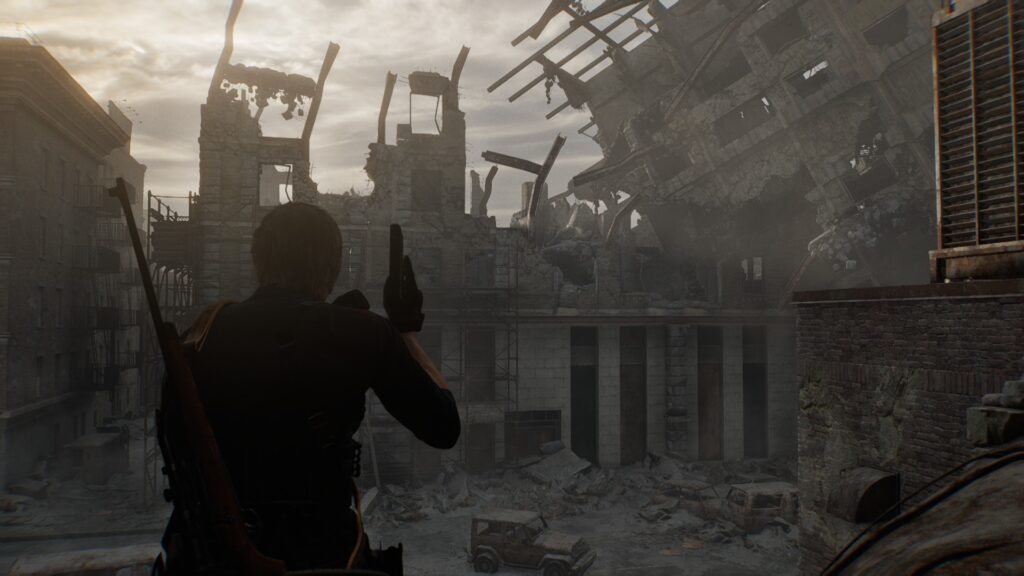
This is essential to bring up, because for a game in the RE4 format (4mat), the location having a character in itself is an important part of the experience; without the usual necessity of needing to linger there and personify it through repetition or meaningful routing, a brown-beige ruin really is just a brown-beige ruin. Sure, Grace gets a largely rote Horror Hospital, but the layout makes all the difference there. Here, though, Raccoon City is outright unremarkable in a way that modern Resident Evil has usually avoided being. It’s fun to return to the RPD building, but that’s a given; we’re remembering the interesting stuff that happened there, which frees it from having to be interesting a second time.
What, then, actually happens during Leon’s sojourn through Raccoon City? Honestly, not a lot… ? There’s a relative dearth of setpieces in general — a section on a crumbling skyscraper floored with glass windows is one of the few standouts — which is a problem only exacerbated (or perhaps caused) by the lack of enemy variety. The excellent “SEND MORE COPS” zombies in Grace’s campaign are completely missing here, and in fact, are even further degraded to essentially just being the same types of guys Leon fought in RE2. They’re vaguely like the Ganados in 4, the ideal enemies in this type of game, but there’s enough zombie-based compromising to make them less fun to fight in general. You can argue that’s “narratively justified” in whatever sense that matters to you, but I think we both know by now that all of that shit is fake if we’re talking about Resident Evil. They can do whatever.
In general, I’d say this whole thing is in a weird spot. This is a sequel to RE2 with RE4’s combat — not, say, a sequel to RE4 with a narrative backdrop situated around RE2. Almost nothing is iterated on here, but there are lateral changes all over the place that make it seem designed to “fit” around the milieu of that game. The merchant is a computer box that exchanges chits for guns, and the inventory inherits more of its vibe from RE8 than anything else. Leon still quips (almost desperately now), he doesn’t really do anything that wacky? The few exceptions, like using a tomahawk to parry a rocket launcher, feel like anachronisms.
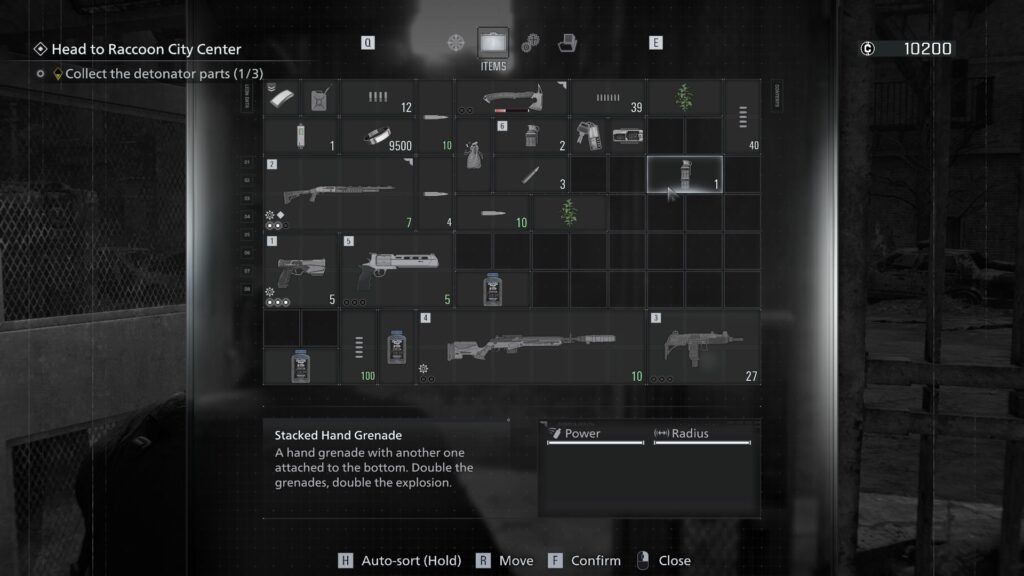
The inventory management is really perfunctory this time around. You can do it for fun (and who doesn’t?), but I only had to “make the space” a grand total of one time. This is partially because they’ve made the bizarre choice to have every essential “key” item take up the tiniest amount of space possible — even the massive jerry can, probably as big as Leon’s torso, is smaller than a single shotgun round. I never anticipated that the lamest RE4-style inventory I’ve ever seen would come from a Resident Evil game.
… Which is weird, because on every other level, the opposite movement is happening. Extravagantly so. The thinking was clearly that, if Grace is so vulnerable, it doesn’t serve to have Leon doing anything other than knocking down zombies like bowling pins. Consequently, in order to sell the split, they’ve stripped “horror” out of the survival-action-horror formula wholesale. This is a big deal! Pretty much the main deal — Resident Evil 4 seen through the flattest possible scope, with all of its texture reduced or removed. It’s a fatal shot to the whole conceit.
When we talk about a split between “action” and “horror” in the context of dual-packaging the modalities of RE7 with RE4, it’s easy to forget that RE4 wasn’t just an “action game.” Still, easier than it usually is, because they just remade it! A lot of people are making lesser versions of games from twenty years ago, but in this case, it’s a lesser version of their remake from 2023. It wasn’t better than the original, but in the sphere it occupied, it was still pretty great. At the very least, it demonstrated that it had a bead on why the format was so compelling.
Why is RE4 still being copied and invoked in the first place? It’s not just because it’s a good action game — there are plenty of those. Its special quality is being super variegated, not just in literal variety but in the manifold tones it deploys to make its unique breed of action-horror such a singular thing. When you think about it, it’s remarkable that such a radical shift in format didn’t spur more folks (outside of weird forums) to regard it as a sort of bizarre non-sequitur. This is a testament to the trick they pulled, because more than feeling like a Resident Evil game, it really is one; a brilliant merging of heroics and shenanigans with Resident Evil’s flair for dread and panic.
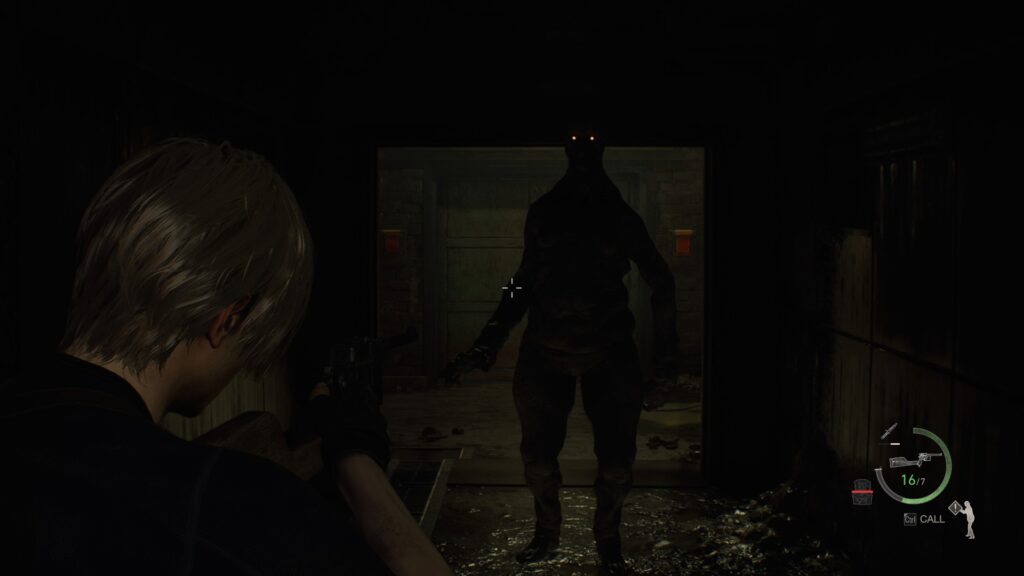
Remember fucking Regeneradors? Those awful, twitchy, inhuman things you could only bring down with a few slow shots delivered with absolute precision? And what about those fast dogs? The spider-things? Even the excellent village opening is sustained entirely by the fact that Leon is overwhelmed, surrounded by cascading difficulties and slowly doomed, narrowly saved by the ringing of a bell. Sure, Leon the character never panicked through any of this, but he didn’t need to, because we did it for him. In this way, his total competency was factored into the experience. We had to get to Leon’s level, and in turn, the game had to find more creative ways to challenge that goal.
But this simply doesn’t happen in Requiem, which takes his indomitable status as a given4. This vibe seems to permeate everything, from the threats on offer to the setpieces it deploys. This is such a prosaic, mundane Leon adventure — a corollary effect of its fixation on the wrong kind of nostalgia.

Credit where it’s due, I was shocked by how much I enjoyed the Wesker thing. I like that it’s very understated: nobody actually points out that he’s Wesker, including Leon — it would’ve been easy to retcon him in as some sort of arch-enemy, but it’s way more interesting that Leon’s never met Wesker and has no idea he was scraping up against his plans in Spain twenty years ago. Even the reveal that he’s a clone is just a little line from Victor about how he’s merely “an imitation.” And no boss fight! They get props for not doing anything obvious here.
It’s such a selective and odd brand of it too: a narrative followup to Resident Evil 2 sans Ada Wong and Claire Redfield, one where Leon is pitted against the remnants of the sinister Umbrella Corporation, which is just… I don’t know, not really his thing? It’s not like they destroyed his home, killed his friends, or personally betrayed him; what I liked about RE4 was that it cast him more as the butterfly effect of a vast world event, making the arc villain of his vendetta Bioweapons At Large while leaving the overt Umbrella stuff for Jill or Chris.5
Also inherited from RE2 is a strange sense of loneliness that doesn’t quite fit with the format. When RE4 shifted its territory from prolonged and isolating horror, it afforded itself the opportunity to tell a more dynamic and interesting story — I use these words liberally — with a larger cast: Luis, Hunnigan, Ashley, Ada, Krauser, the whole Saddler crew. Even the shop menu is a distinct guy. But again, Requiem benefits from none of this. The only character who really exists in Leon’s world is Sherry Birkin, another legacy character, and one whose potential seems notably sidestepped — when Leon returns to the same orphanage where she was chased around by a serial murderer, there’s nothing nervous or humanizing or even strainingly professional about their dialogue. She doesn’t even bring it up.
After all, almost inevitably, this is Leon’s game. By the time we’ve returned to Grace, she’s the one who feels like the tag-along.
DISGRACED PEON
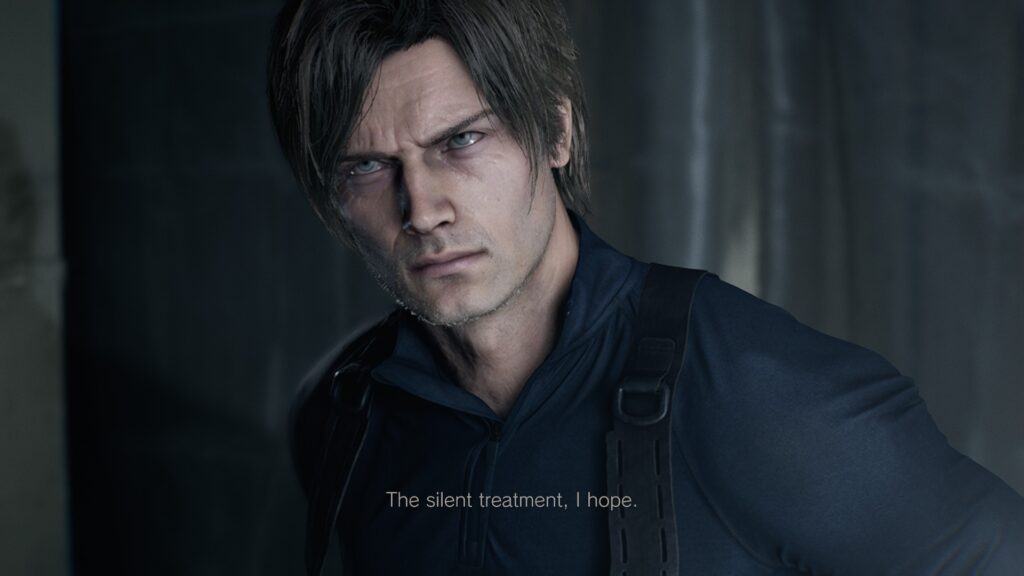
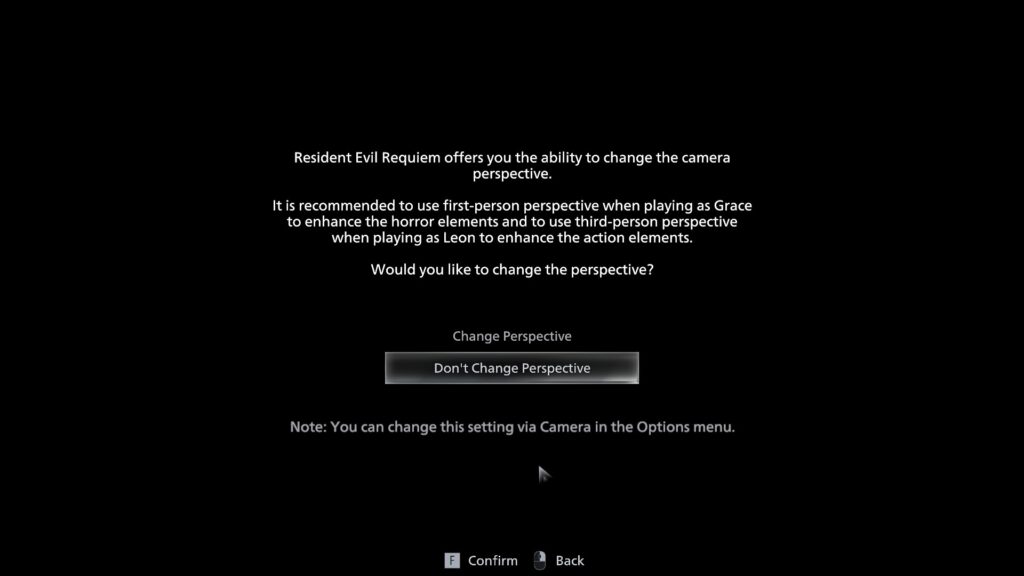
Have you ever done that thing where there are two things you like separately, so you try to combine them into one uber-thing only to end up creating a new, lesser experience? I think Requiem is basically that for me. I’m not sure what this style of hybridization actually adds to Resident Evil — what new experiences emerge in the overlap between having a sorta-RE4 in a sorta-RE7 game? Besides raw novelty? I can’t really think of a single thing. You might say it accentuates Grace’s helplessness, but by the time you’re truly Leon, her part in the game is basically done anyway. And while it might accentuate Leon’s superhumanness… I mean, come on. You get the same effect with less effort when he dodges a chainsaw by backflipping.
Like most things, it works best during the Care Center, when the switches are brief and punctuated by long moments spent playing as Grace. Running through the building after she’s already traversed it? Saving her from a relentless onslaught by sniping from a nearby roof? This stuff is great because it plays into the dichotomy. It’s novel to have Leon easily dispatch what Grace has been struggling with for hours, just like it’s fun to have Grace’s wrists nearly shatter from the recoil of shooting Leon’s big stupid cool guy gun.
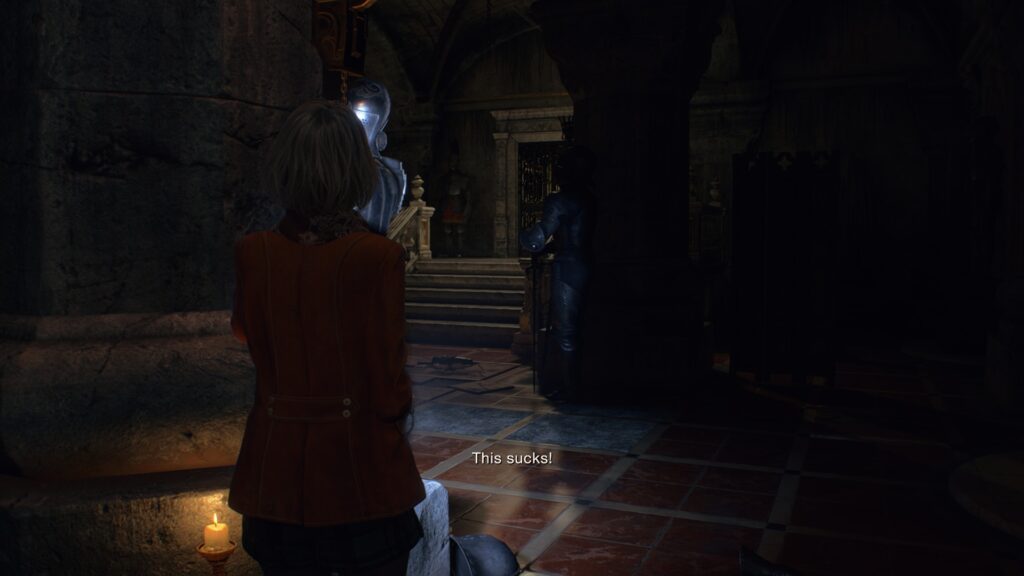
Resident Evil has been doing this sort of thing since 7 had the section with Mia on the boat. Village had Chris, and even the remake of 4 had Ashley’s segment in the castle. I feel like these moments all basically achieve the same desire that’s writ large in Requiem, which is to glimpse the inverse of whatever game you’re currently playing. They were neat, but do you get much by stretching these little instances into selling points? I’m not convinced.
When the ratio is swapped, and the comparison becomes purely abstract — Grace never spends any time in Raccoon City, atrophying the vibe of a normal person struggling in Leon’s batshit world — it just becomes one of those streaming gimmicks where the guy has to play a round of Minesweeper every time he loses a round of Tetris. It’s a fun novelty, but I don’t think it works as a game. For me, Grace’s stuff is so well-developed and good that I end up just wanting to play an RE7-sized version of it, and Leon’s stuff is so cut-down and simple that I want to go replay RE4. I resent the Leon segments for cutting Grace’s short, and I resent Grace’s segments for getting in the way of a properly new iteration on RE4’s action-horror trappings.
At the end of all this, I’m left asking: what makes two half-games better than a single, coherent whole? A question Requiem invariably proposes, but one that it doesn’t answer. Maybe this is a me thing, but I’ve never seen the need to “reconcile” these two halves of Resident Evil. Folks bring it up like it’s a contradiction akin to a Columbo spinoff where he shoots people, but I don’t get it. Seriously, is it that complicated? Sometimes these games are horror, sometimes they’re action; sometimes they’re about vulnerability, and sometimes they aren’t. At their most successful, they’re an eclectic and unpredictable mixture of both. Most Resident Evil games aren’t just one thing, and it’s that hard-to-articulate variety of styles and modalities that makes them so uniquely themselves.
It’s a little interesting, then, that in trying to be two things, Requiem really is just two things. It tries to bring order to experiential chaos by severing these qualities from another, sorting them by type, and then carefully bifurcating them from one another. In the process, that essential bleed-over is lost completely.
I still liked it fine. It’s not a disaster, but it is an experiment gone wrong.
- And not the character, of course. Articulating my disappointment with the writing and high-level narrative in a Resident Evil game would be like articulating a work-related issue with upper management; nobody is listening, and at the end of the day, you want something that it wasn’t designed to do. The only complaint I’ll bother voicing is that I have no idea why they made her an FBI agent; it stops being relevant five minutes into the game, and actively engenders weird questions from then on. Why not make Grace a citizen journalist in over her head? It would tie into the events the game spends its first sequence cataloguing anyway. ↩︎
- Grace might be the first weapon-toting survival horror protagonist in the medium’s history who doesn’t even get a shotgun. An innovation in its own right… ? ↩︎
- I like the idea of needing to craft ink ribbons on the game’s classic difficulty, but their availability is restricted more by having the necessary tins than by having enough blood. Not even a lot of blood! It’d feel like more of a squeeze if they required the same resources as a makeshift knife. ↩︎
- To the point when dying feels like it should carry the Prince of Persia consequence of the game rewinding while he goes “wait, it didn’t happen like that.” ↩︎
- And, really, this should probably be their game? Leon didn’t even live in Raccoon City. He has no actual emotional attachment to the location itself that might paper over some of its deficiency as a setting. Imagine if it was Jill, and she had to go through her old elementary school or something. Interfacing with a character’s rarely-seen nostalgia is always more interesting than doing that same interfacing with the audience ↩︎