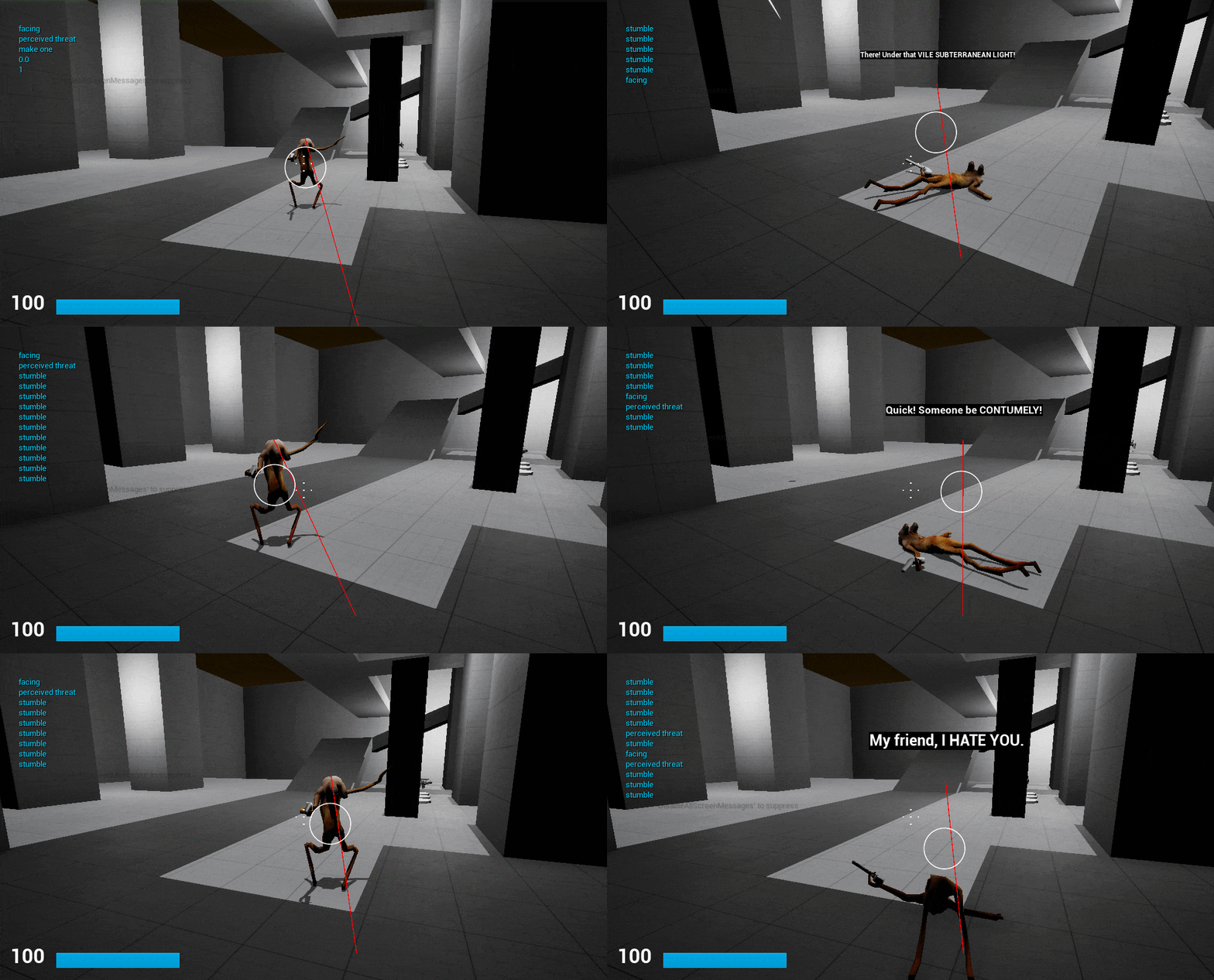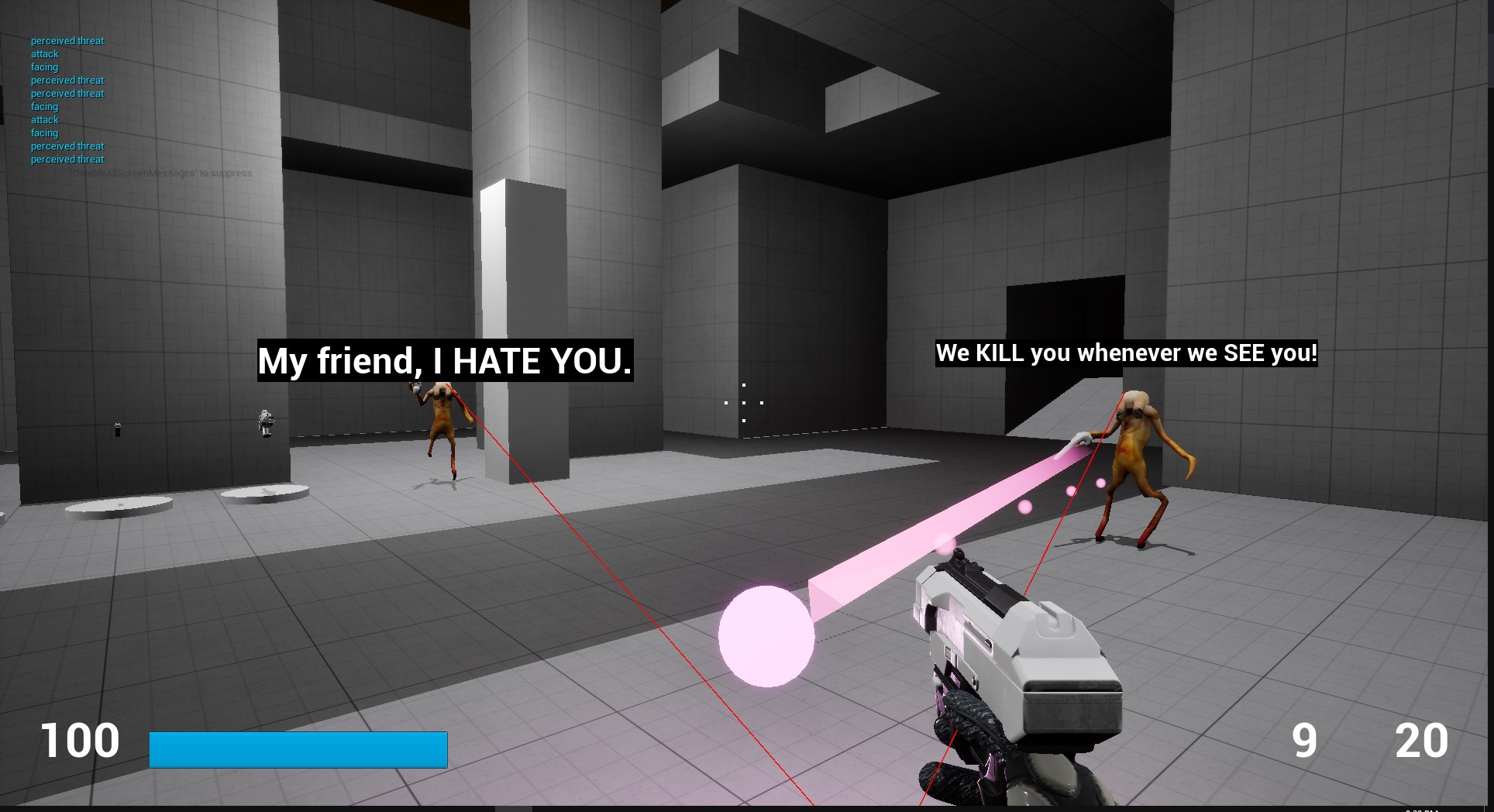
We’re making a new videogame, and I thought it might be interesting to write about how it’s going.
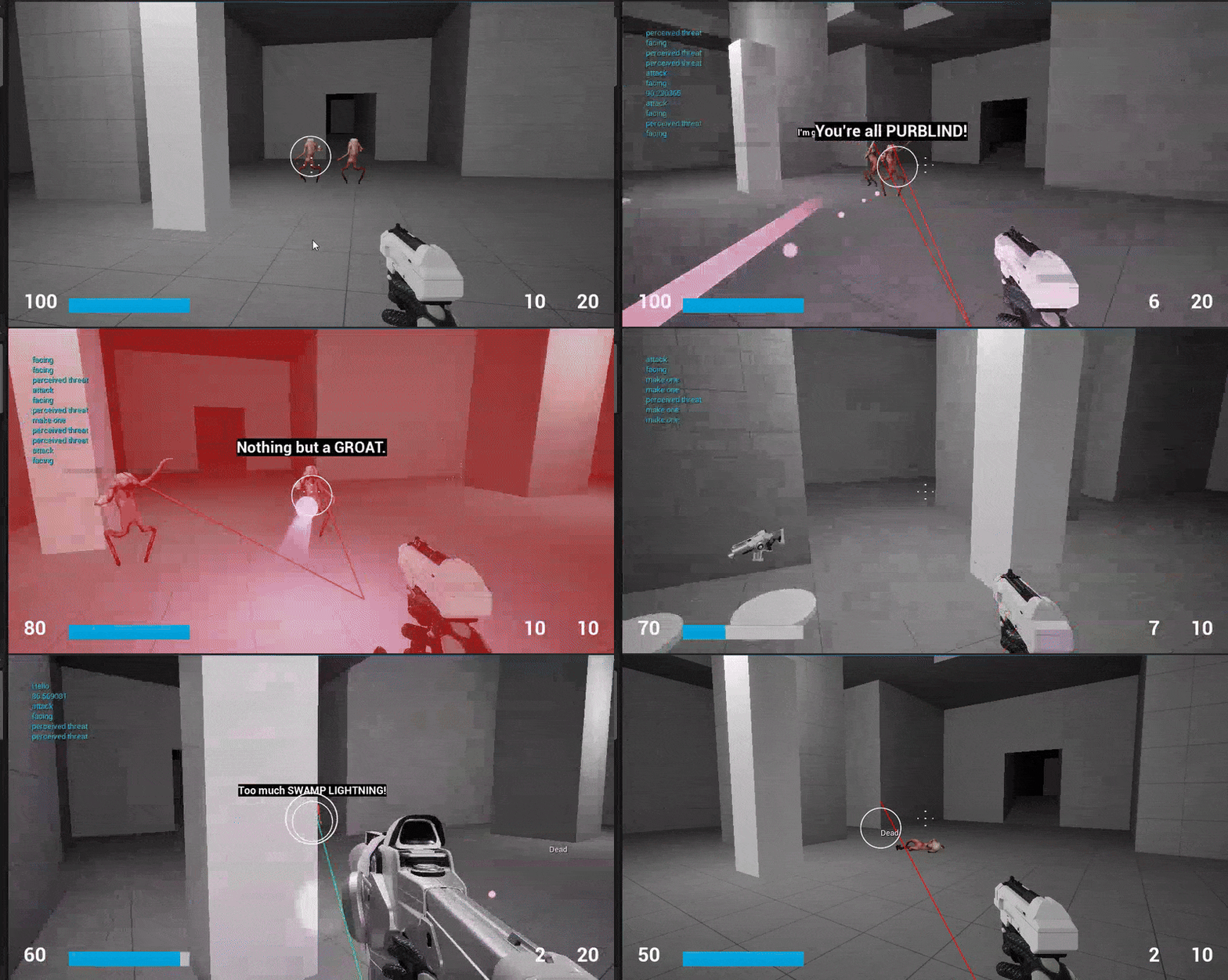
We’re not entirely sure what kind of game it is yet. Right now, it’s a first-person shooty thing where you leap away from projectiles of strange light shot by rambling aliens. It’s got kind of a Metroid Prime thing going on with the rhythm of the combat, albeit with enemies behaving a little more like they would in Halo. There’s a long jump from Half-Life and some other movement tricks. It’s a lot of uncoordinated game goo, but I’m already a little surprised by how fun it is to mess around with.
We (that is, Rachel and I) seem enticed enough to go further. At the moment, we’re calling it Pharmakos.
By the way, this is a Howling Stars game, so check this page if you want the full rundown on how that works. Basically, Rachel does the art, programming, implementation, and 50% of the creative direction; the other 50% comes from me, along with all the writing and a decent chunk of the design. I swap between I and We pretty liberally while writing these, which I’m sure is a nightmare for anyone on the hunt for Passionate Solo Devs. For the sake of simplicity, if it happened outside of a document, just assume she did it!
I assume a lot of folks in gamedev go through that awkward intermediary stage where they want to make something other than a walk-around-and-stuff-happens narrative without knowing precisely what kind of videogame they could otherwise make. I try not to fixate on genre too much — it’s a lot more fun to imagine a series of intended effects you can build towards instead of entombing yourself in the rotting cathedrals of long-abandoned forum threads trying to hash out what an immersive sim is. The sooner you give your thing a label, the sooner you’ve got all the resulting conventions to lean on. The work goes faster, and the result is usually clean, but maybe “smooth” isn’t always the ideal. After a bit, it just feels like you’ve dug a little pit under yourself and have managed, while still standing inside, to fill it up with sand.
Still, I’m not apathetic about genre. Maybe I see it more as a thing to use by subtraction. Certainly I’ve been (and continue to be) resistant to the idea of making a first-person shooter. People have been making those things for thirty-five years, sometimes in new territory, sometimes encroaching on it, and sometimes while doing nothing much at all. Thinking about designing around those terms is a source of ever-growing fatigue for me, so I know I’m probably not interested in making one. Still, the current game is in first-person and has you shooting at things. Does that mean what it sounds like?
My hope is no, or at least, not in the way it easily could be. We want to make something different, even if it seems pretty familiar, and sometimes you just have to settle with certain elements in the hope that more interesting things will be stumbled upon later. For now, if I was held at gunpoint and forced to describe the current idea to an audience, I’d have to lean on comparison and call it a MetroidRainWorldSystemShockYumeNikkiStarControl2-like before pointing in the opposite direction and then quickly running away. (And if we want to put effort into selling this one, I ought to start practicing now. Promise to forgive me if I ever use the word Metroidvania in public — I don’t know what kind of desperation might lay in our future.)
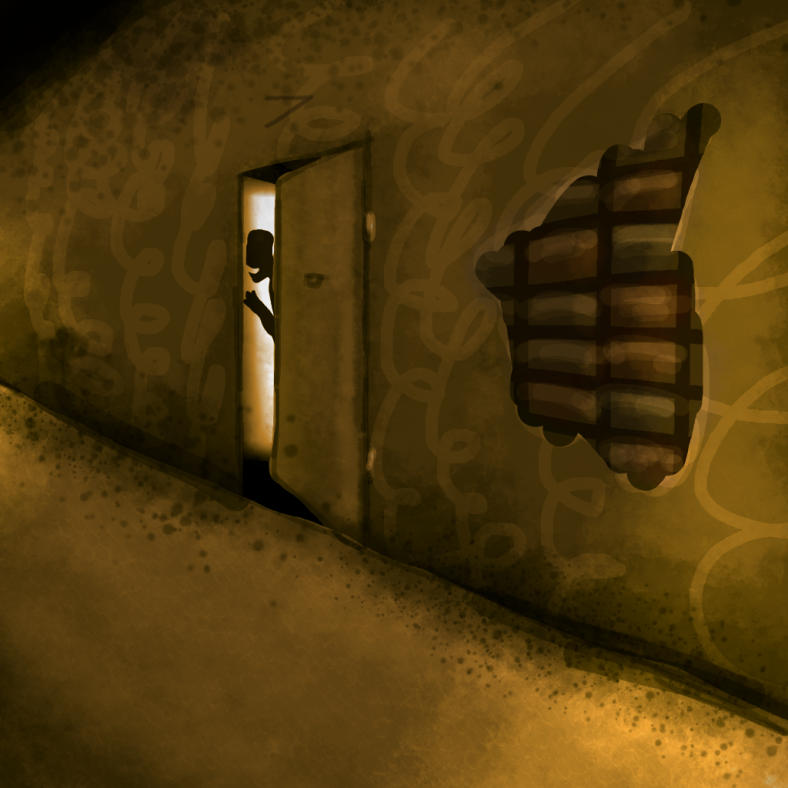
Rachel is tentatively sketching out an area called the Refugium, a neglected apartment designed for tenants whose biology is incompatible with normal housing.
What I can say for certain is that I’m having a lot of fun writing it. It’s a typical-for-us ragbag of unidentified oddments, archaisms, surrealistic vignettes, and weird little creatures. In more literatesque terms, I’d situate it between Gene Wolfe and Mervyn Peake; weird fiction like that of William Hope Hodgson’s which predates the more toxifying and commodified stylings of Lovecraft. I’m not a game designer by trade, so I struggle a lot against the yoke of expectation which tends to define it. That’s why the writing is such a delight — zero anxieties there. This stuff is so historically undervalued in games that you have the license (possibly even the obligation) to be as abstruse and erudite as you want. If you liked Chiaroscuro Imago, you’ll definitely like this one.
Anyway, I figure every one of these little posts ought to have at least one deep dive into some particular thing. Here’s an enemy!
THE TULLY
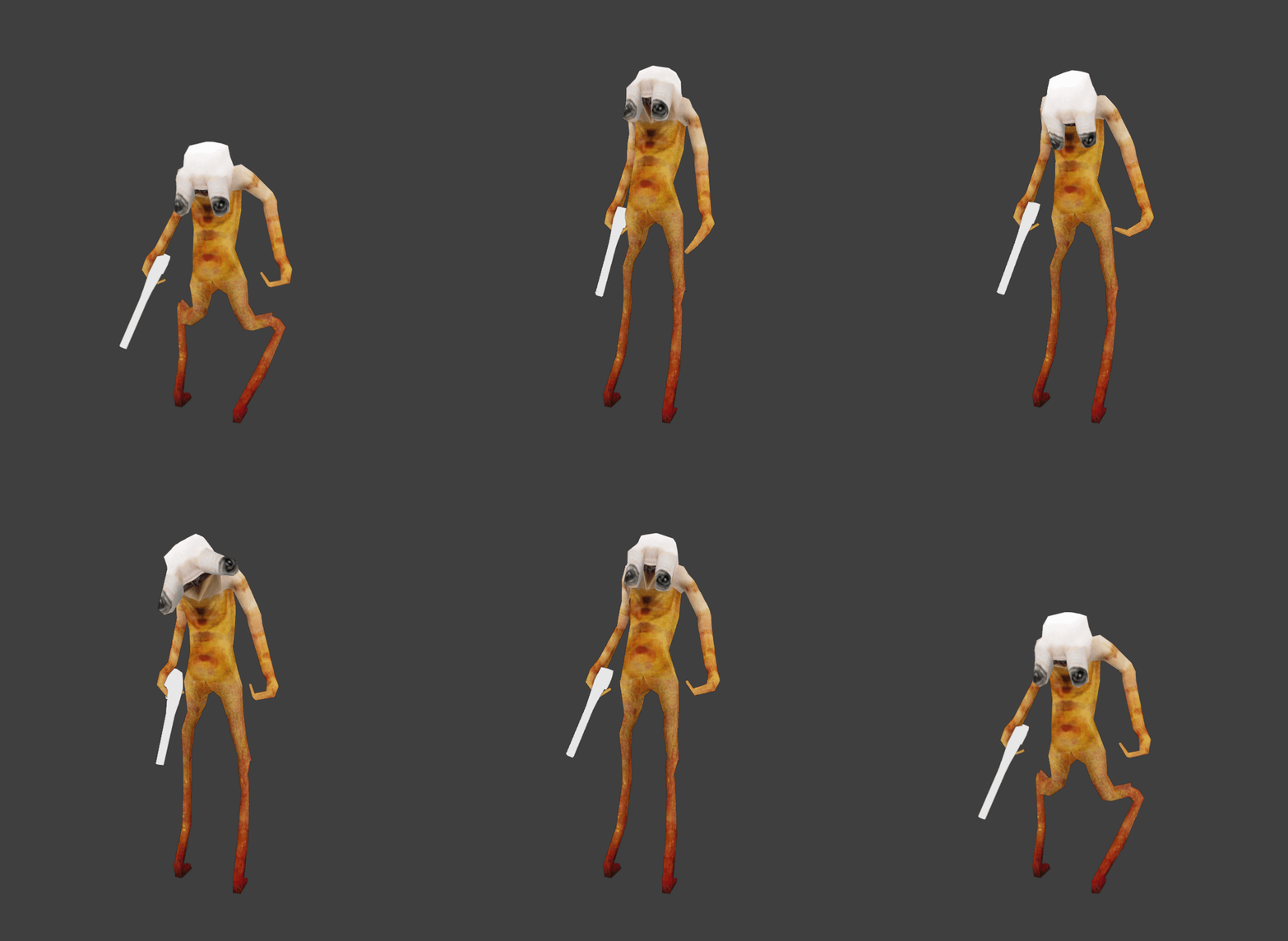
Right now, there’s one enemy that’s in a stage of being reasonably complete enough to be used for actual prototyping. It’s a kind of creature that’s called a Tully — after the infamous Tully monster, but also in tribute to the hapless ghost hunter in the second assignment of Sapphire & Steel who lives happily ever after and definitely doesn’t get eaten by a hungry darkness from beyond time.
Tullies are pretty much small, funny guys. They fulfill the Halo’s Delight of fighting a bunch of runty cowards who are universally weaker than you. They tend to freak the fuck out at the slightest provocation and occasionally engaging in cataclysmic acts of suicidal bravery. And who knows? Maybe they’ll succeed every now and then. They already yell and gesture a lot, which is most of what an enemy needs to do in order to look smart.
Are they smart? No, absolutely not. Look at them again.
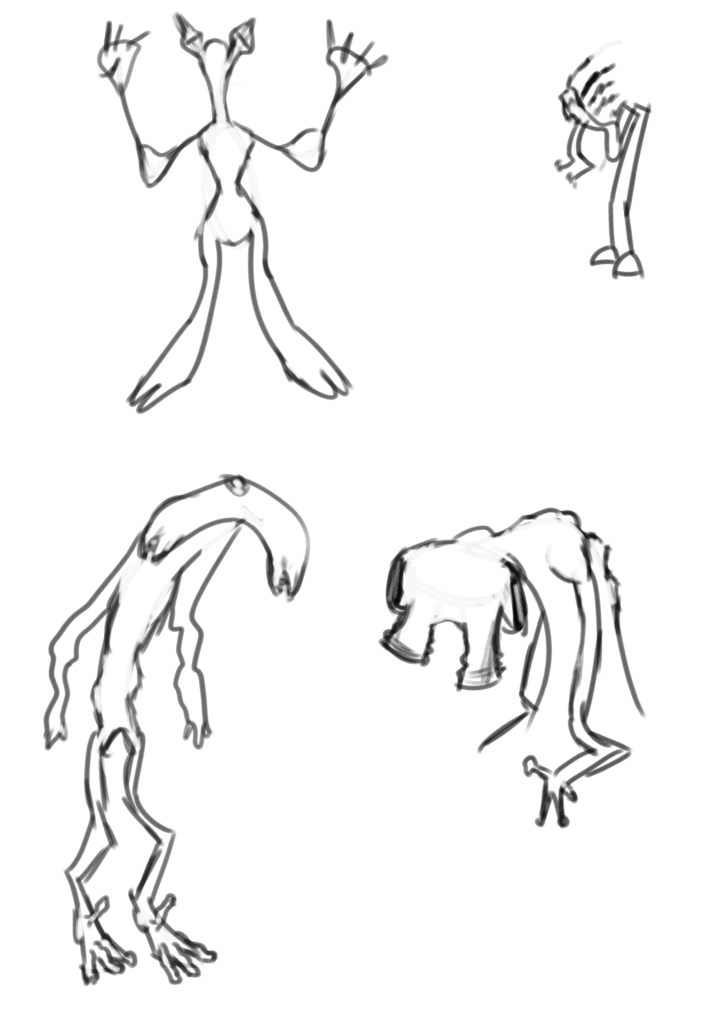
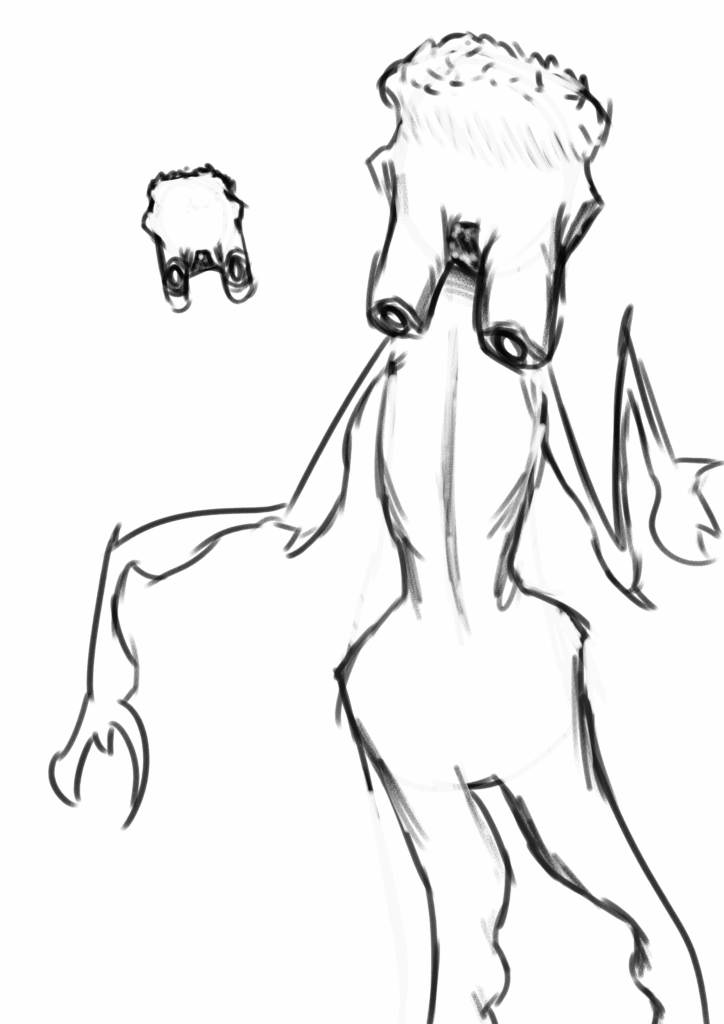
With the design, we wanted something comedic and bendy and not quite anthropomorphic, but which was still going to be readable enough to accommodate weirder creatures down the line. One of the only strictures was to avoid anything too insectoid. I tried to dig up a lot of my favourite creature illustrations from pulp magazines and assorted sci-fi artists, with a particular focus on unusual shapes and body plans. Rachel started doing some amazing sketches, and we eventually settled on a weird, spindly thing with a head that vaguely resembled a lump of coral.
The fun part about coming up with this stuff is that you inevitably end up with five other ideas that seem like they’re equally as good in an entirely different direction. I’m especially fond of the creature in the top-left, which perfectly resembles the sort of frantic sketch a purported UFO abductee would make of their captors. Something for down the line?
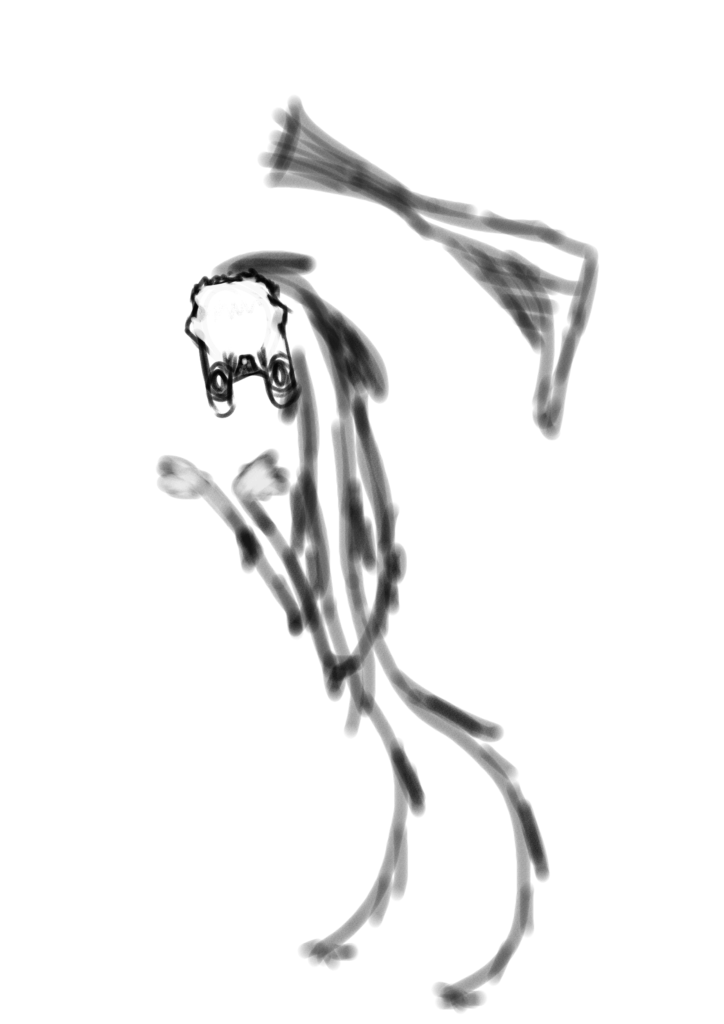
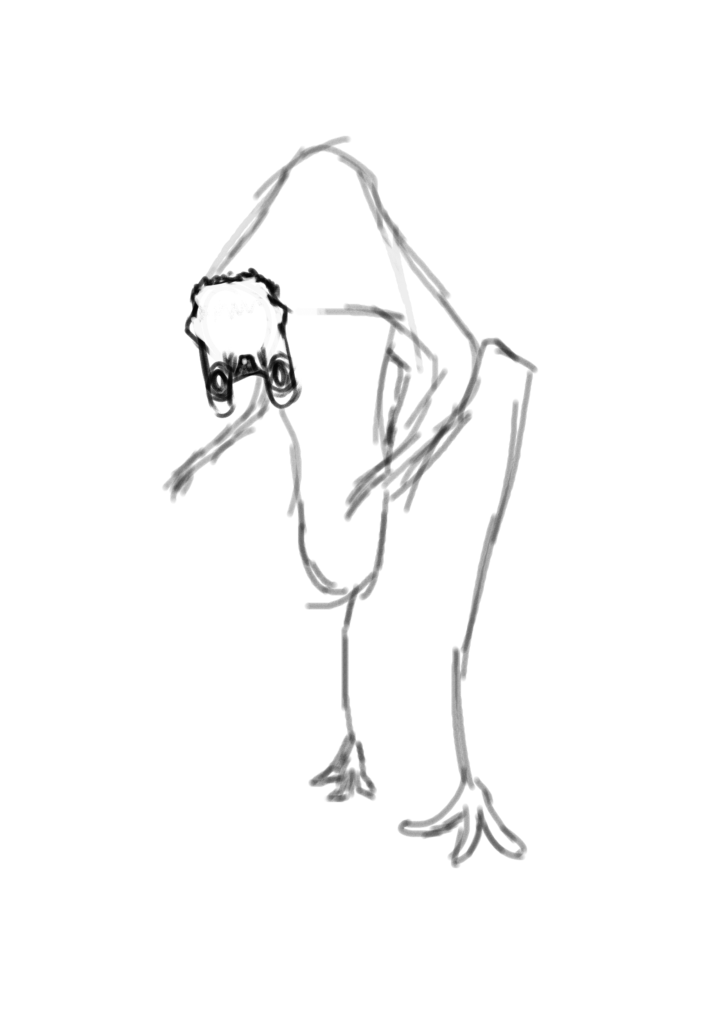
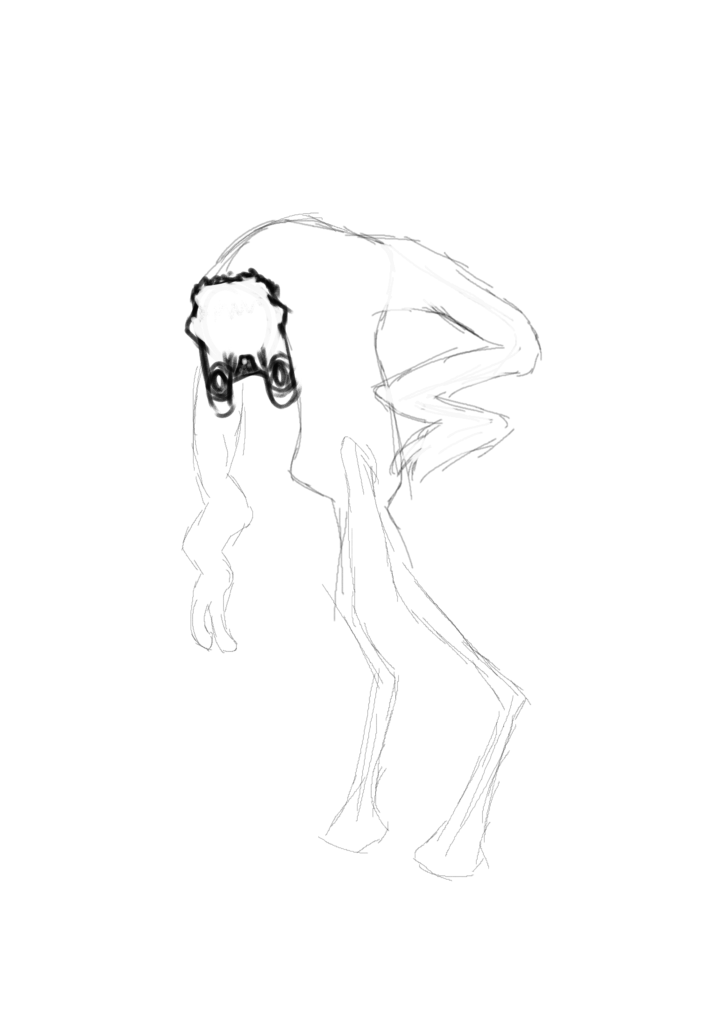
With the head decided, Rachel started experimenting with a ton of different body types. Again, a lot of great stuff here, but the one on the left ended up winning us over.
From there, Rachel did this.
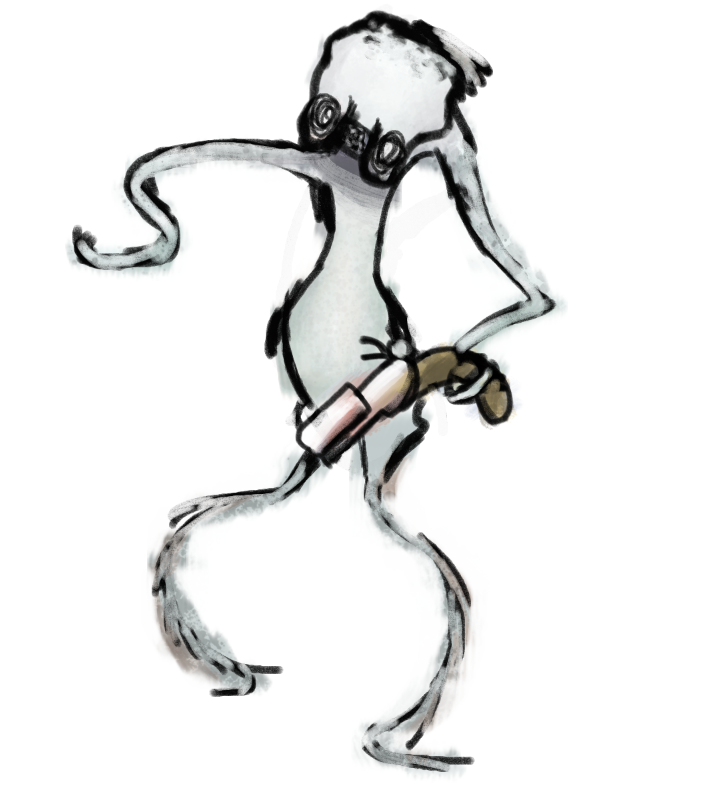
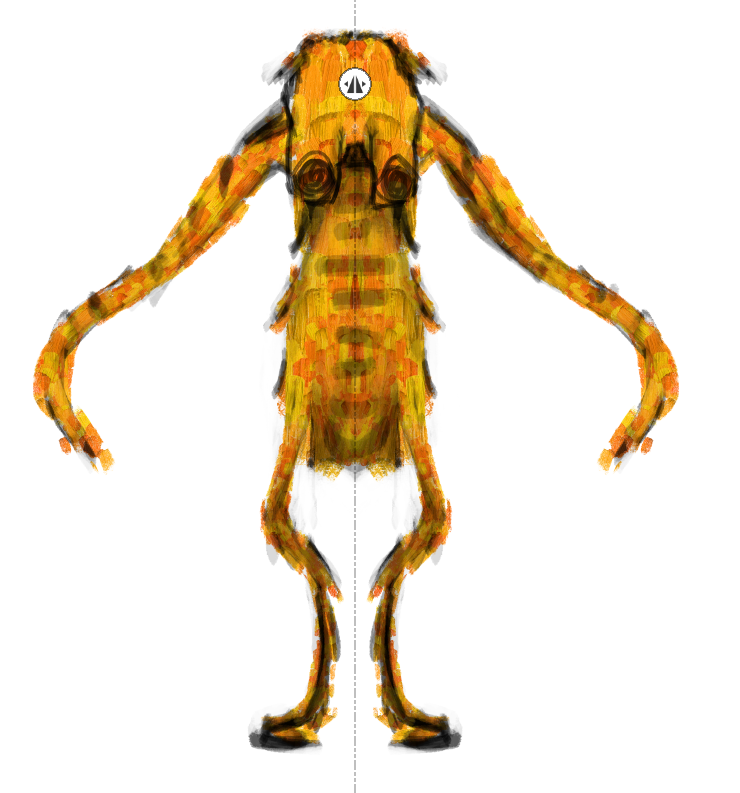
It was the addition of color that really sealed it. I’m a big fan of the tawny (like Tully!) and almost tiger-esque patterning, with the eyes becoming more and more like impressionistic scribbles and less like a recognizable ocular organ. The whole thing reminds me of an egg yolk.
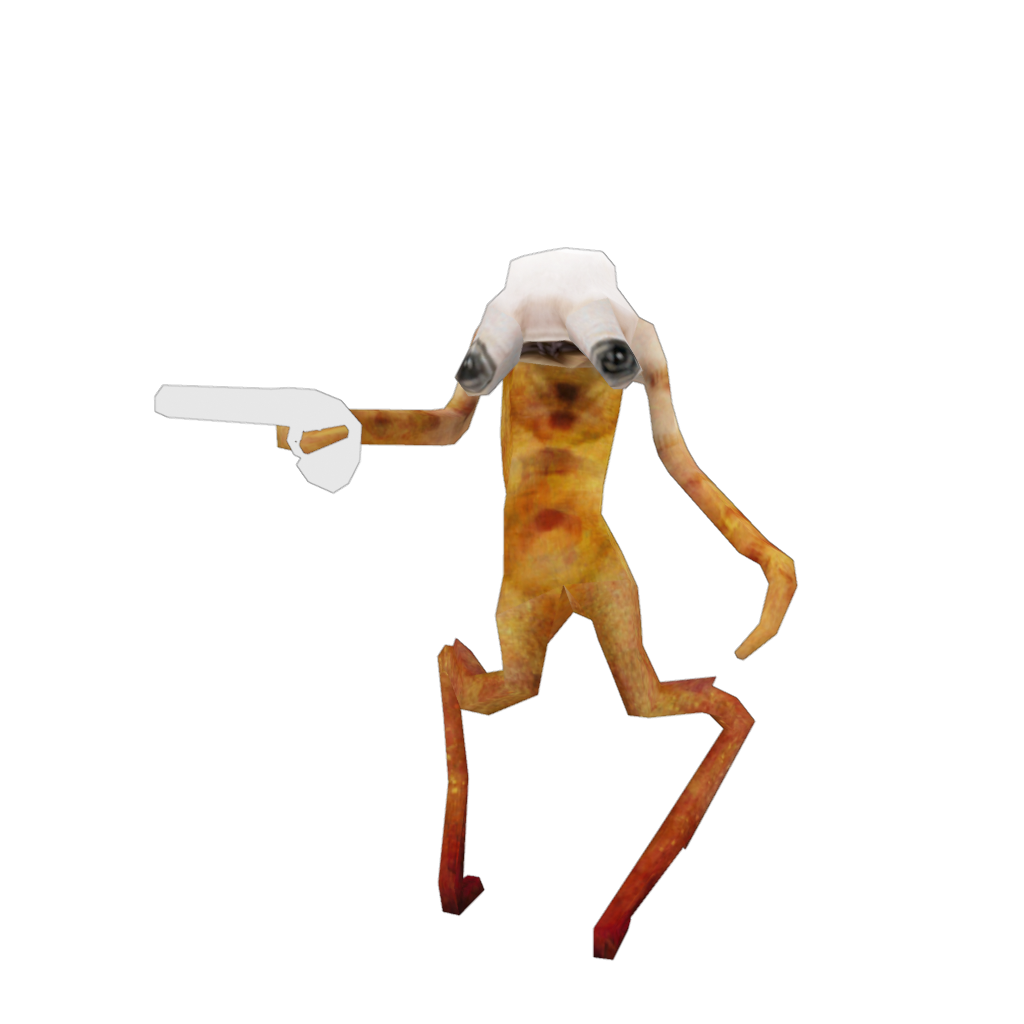
From here, Rachel began actually creating the Tully in Blender. This part is usually tough — certain details are inevitably difficult to translate into 3D, so there’s always a moment where it feels like the design is shedding parts at the speed of a downed aircraft. There was a similar struggle while she was making the final thing at the end of Chiaroscuro Imago. It turns out that ripped clothes are a lot easier to draw when you don’t have to overlay them convincingly on top of a 3D shape. This one ended up quite close, though. I like it a lot, particularly in motion.
Notably, this version of the head accidentally ends up looking a lot like the Headcrabs from Half-Life. I’m not sure how to feel about that yet, since it lends the whole thing a familiarity that would seem counterintuitive to the intent of making a fairly outré videogame. It wouldn’t be hard to diminish the resemblance later, but maybe there’s something to it? It has a bit of a pop art sensibility; the Spaceballs gimmick of transposing familiar shapes into a laterally separate context, like Doom WADs that turn the demons into shopkeepers or whatever. I dunno! We’ll sit on it for now.
Not sure about the gun yet. In my mind, it’s constantly threatening to slip out of their prehensile grip. Maybe it looks like a chew toy, and when they squeeze it, screeching lightning shoots out of the business end.
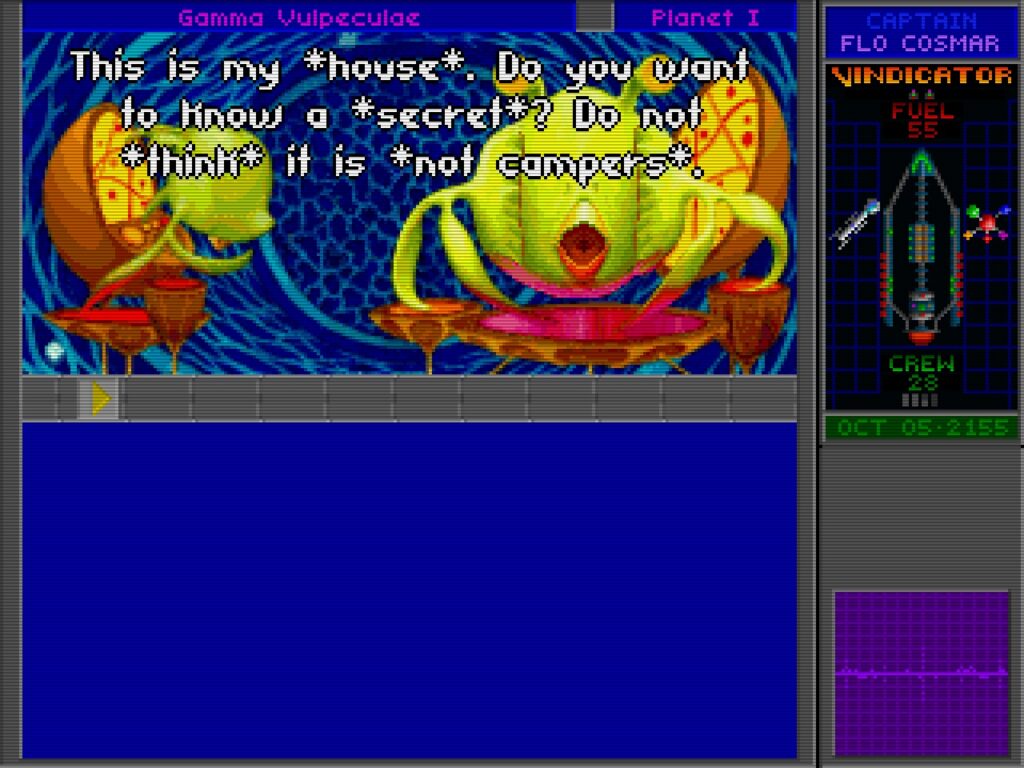
On my end, I’ve been trying to write a lot of ancillary material to inform their animations and dialogue. My touchstone for a good cast of inhuman critters, at least in games, is Star Control II. There’s a delightful pulp sensibility to it; stark cosmic horror mixed with the goofiness of an Amazing Stories Martian in a soup of genuinely strange biology. It’s everything that Mass Effect variously soiled and fucked up for an entire generation of hapless teenagers.
I’ve always wanted to do an Orz. Everybody loves the Orz. You can’t understand half of what they’re saying because they’re so alien that your computer can’t translate them properly. We had an Orz in a shelved game of ours, where a horrible thing could only speak by recombining phrases spoken during the Apollo 11 Moon missions. I adore garbled and silly and creepy things like that, so the Tullies were an opportunity to really go bugshit.
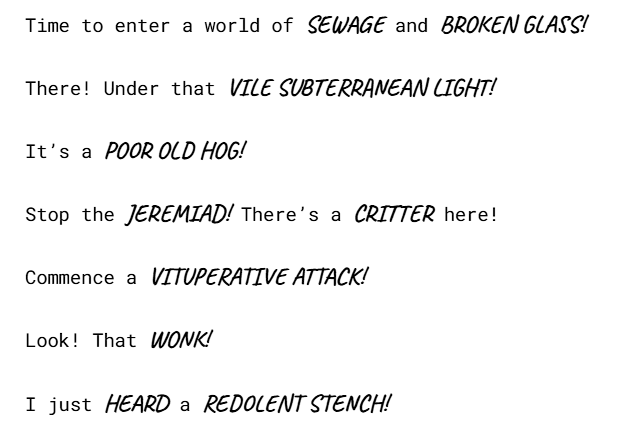
I’m still nailing down the grammar and general tone of their dialogue, which means filling in pages and pages with shit like this. A lot of the earlier attempts relied on made-up language — they yelled things like GRUFFLER or HADDY LECK, and while that had its own charm it didn’t feel especially distinct. Currently, I’ve started drawing from a hoard of weird phrases variously poached from old novels, logbooks, newspapers, etc. and those seem to be leading to a breakthrough. I really enjoy the concept of an alien whose language, under the strain of translation, sounds indistinct from an 18th century British periodical covering the Gin Craze.
These fonts are close to what I’d actually like the final result to look like, with everything scratchy and handwritten meant to represent a “best-fit” translation of whatever it is they’re actually yelling. Originally, we were thinking of displaying the dialogue via regular subtitles, but Rachel hooked in a basic speech bubble that draws the lines over the head of whoever’s speaking them. I really like that, so we’ll probably keep it.
Even with such a rough implementation, I’ve been surprised by how readable everything is under the strain of an ongoing fight. It’s almost like a metric for how fast the combat should be: If it’s too hectic to read anything they’re saying, then it’s probably too hectic for the game we want to make. I’m big into novel applications of videogame text, so I want to see how much farther we can take it. Louder exclamations appearing with a bigger and more legible font size? Lines getting blurrier as the enemies take damage? The final Tully in a group becoming so nervous that it starts making spelling mistakes?
As an aside, one of the few things we feel fairly certain about with regards to Pharmakos, even at such an early stage, is that we’re not doing any voice acting. I’d go as far as to argue that voice acting, applied as an expectation to games with a large amount of reading, usually makes the reading feel more exhausting than it would be if you were just processing it in your head. A lot of classic CRPGs include spoken language as a rare treat to indicate the importance of a specific character or moment, but people have a bad habit of regarding that approach as a sign that full voice acting was desired and just couldn’t be managed. Never mind that you’d have to rewrite vast chunks of these games to make their dialogue and environmental prose palatable as vocalized narration, itself the presumed end-all purpose of text in a videogame.
It’s a shame because, when you commit to this stuff early, you can get a really special result. I remember playing Dread Delusion and appreciating all of the ornate little descriptions of things; even the absence of bespoke animation was typically conveyed through descriptive and occasionally poetic prose. I really admire stuff like that, and I think it’s the sort of thing you can credit to not treating the act of reading as a Gamer’s Compromise. Remember when you could click on a pile of garbage in the first Fallout and get a paragraph about it? I want to head in that direction, wherever it ends up going.
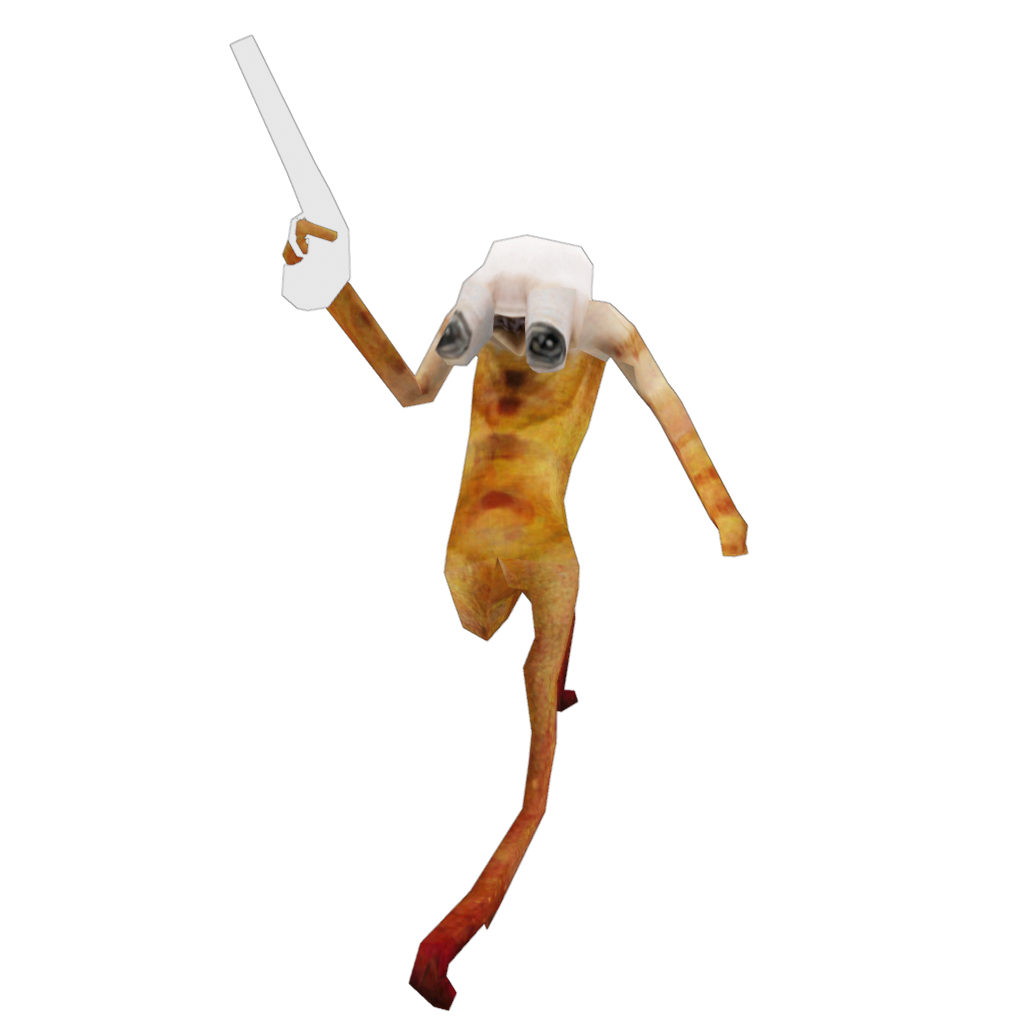
It should be apparent by now that Tullies aren’t especially good at fighting. They’re scatterbrained, awkward, and notoriously bad at strategizing. When creating an archetype like this, I think it’s worthwhile to second-guess it a bit. Why do these guys suck? It’s a question that’s just as easily taken for granted, but it’s worth giving it some thought. For a number of reasons, speculative biology is a genuine theme in Pharmakos; it really helps to center stuff like this within a particular idea or an interesting situation, even if it isn’t directly communicated in any real way.
The driving premise of a Tully is that, when it has children, they all inherit an accumulation of their parents’ life experiences, memories, skills, etc. with the caveat that it’s all fragmented and randomly distributed amongst an entire brood of hatchlings. If a Tully works as a glazier, at least one of their kids will be good at making glass… probably. They might also find themselves born with an intimate familiarity of a five-step process while inexplicably having no knowledge of step three. At the same time, one of the other kids may find they can effortlessly carry out step three of a task they have no context for. Some will inherit stifling, traumatic memories; some will inherit forgotten passions of yesteryear; some will inherit things from their progenitors which even the parents themselves can hardly understand.
This mental Lamarckism is often deliberately exploited, albeit with limited success. Suppose that fifty Tullies were raised from birth to be soldiers, experiencing a life of discipline and training — would their own children be born into the world with those skills already engrained within them, effectively tripling the size of an army? Their progeny wouldn’t be bad soldiers, but without the same degree of training, they’d be a little worse at everything than their parents were. Now imagine their children, and the children after that. Before long, it’s like tracing a picture and then tracing the trace, continuing down the line fifty times before comparing your last trace to the original image. The result is a scratchy daub with only a passing resemblance to the skill and thought present in the original item.
The product of this scenario is what you’ll hopefully encounter in Pharmakos. I wanted the Tullies to be funny in a surrealistic, abrupt sort of way, but I also wanted them to be a little sad. They’re basically children posturing as adults, doing the only thing they really know how to do. At the same time, I’m hoping they’ll have the capacity to surprise you every now and then — glimpses into what these things are really capable of when they’re not being used as cannon fodder. There’s something I’m especially excited about in that regard, so hopefully you’ll hear about it sometime.
That’s all for now. It’s still extremely early days on Pharmakos, but I’m already surprised by how smoothly it’s coming together. Rachel is brilliant and continues to exemplify, unsurprisingly, pretty much my dream working arrangement. I probably don’t need to outline why working on a two-person project with your spouse is ideal; there are pitfalls to avoid, but mostly, it’s just a snappier and more communicative version of whatever it otherwise might be. If circumstances ever force me to circuit around proffering Advice for Aspirational Videogame Neophytes, my only suggestion will be to find somebody you enjoy making games with and then, if possible, marry them. Tell them that it cuts down on the amount of documentation that needs to be written. If they love you, they’ll understand.
My worries about the future are mostly immediate — we’re both competent level designers but are, in sum, probably not the best crew for the job. This is part of why I want to make something a little different. If we were setting out to make a game with typical Quake-style levels, the result would probably be average at best. Even if they were good, or great, I mean… it’s Quake. There are hundreds of amazing Quake levels and two-dozen Quake derivatives. Everybody knows what they’re getting. Even the good stuff is eventually unremarkable.
So I’m taking more cues from messier sprawls; games that treat level design less as architecture and more as an excuse to find stuff you weren’t looking for. It’s a good excuse to fill a world with bizarre little things that respond to your presence in surprising ways. It feels like it’s harder to “fail” at, in the same way that it’s more comforting (and probably more interesting) to make a Yume Nikki fangame than something in the vein of Final Fantasy VI. If you’re good at drawing weird pictures, make a game filled with weird pictures!
Until next time…